
Butler Current Owner Record Card
The Butler County PVA is your first stop. Its qPublic system searches by owner, location address, parcel number, or legal information. Each match opens a live parcel card. Match the card's fields against the deed record. Whatever the card leaves out must be confirmed on the live parcel and deed.
| Ownership | The PVA name used for tax purposes on the January 1 roll |
|---|---|
| Parcel or map number | The key that ties the tax parcel to other Butler records |
| Mailing address | The destination for tax notices, not proof of residence |
| Situs address | The physical address assigned to the property |
| Legal information | Text used to compare the parcel with a deed description |
| Latest deed | The separate Clerk record needed to confirm the newest grantee |
The PVA owner is not an occupant record. The owner may receive mail elsewhere. Land can sit in a company name or under a trustee. Read each role exactly as written, keep the record date, and never turn a mailing address into a claim about where a person lives.
January 1 Controls Butler Ownership
The PVA fixes assessment and ownership for tax purposes on January 1. That date controls the whole year. A buyer who takes title afterward may still see the old owner on the current tax bill. The PVA tries to mail the new owner from the recorded deed. The printed line can lag a full year. January 1 is the central Butler County test. Ask what date each name describes. A tax roll answers who was carried for taxes that year. A later deed answers who received the newest recorded conveyance. Note: A post-January sale can make a correct Butler tax row look stale. It can look stale beside a newer recorded deed.
Confirm Butler's Owner of Record
Verification runs from the parcel card to the newest deed. The Butler County Clerk records deeds and provides the eCCLIX search route. Public private-use searching is limited to five Butler searches per day. Document images require subscription access. The office publishes no exact online cutoff.
- Read the PVA ownership text and copy the complete map number and situs address.
- Search the apparent owner as a grantee in eCCLIX and favor the most recent matching deed.
- Compare the legal description, grantor, grantee, and recording date with the same parcel.
- If an entity holds title, inspect the state business filing without substituting it for the deed.
- Owner of record
- The party named by a specific official record as of its effective date.
- Vesting
- The wording that states how the deed places title in a person, trust, or entity.
- Grantee
- The party receiving the interest in the recorded deed.
- Registered agent
- The contact named in an entity filing, not necessarily the parcel owner.
Check the Butler PVA Notice
The official PVA page states the January 1 rule and warns that its information may not be complete or current. Read the Butler PVA notice before trusting any single card.
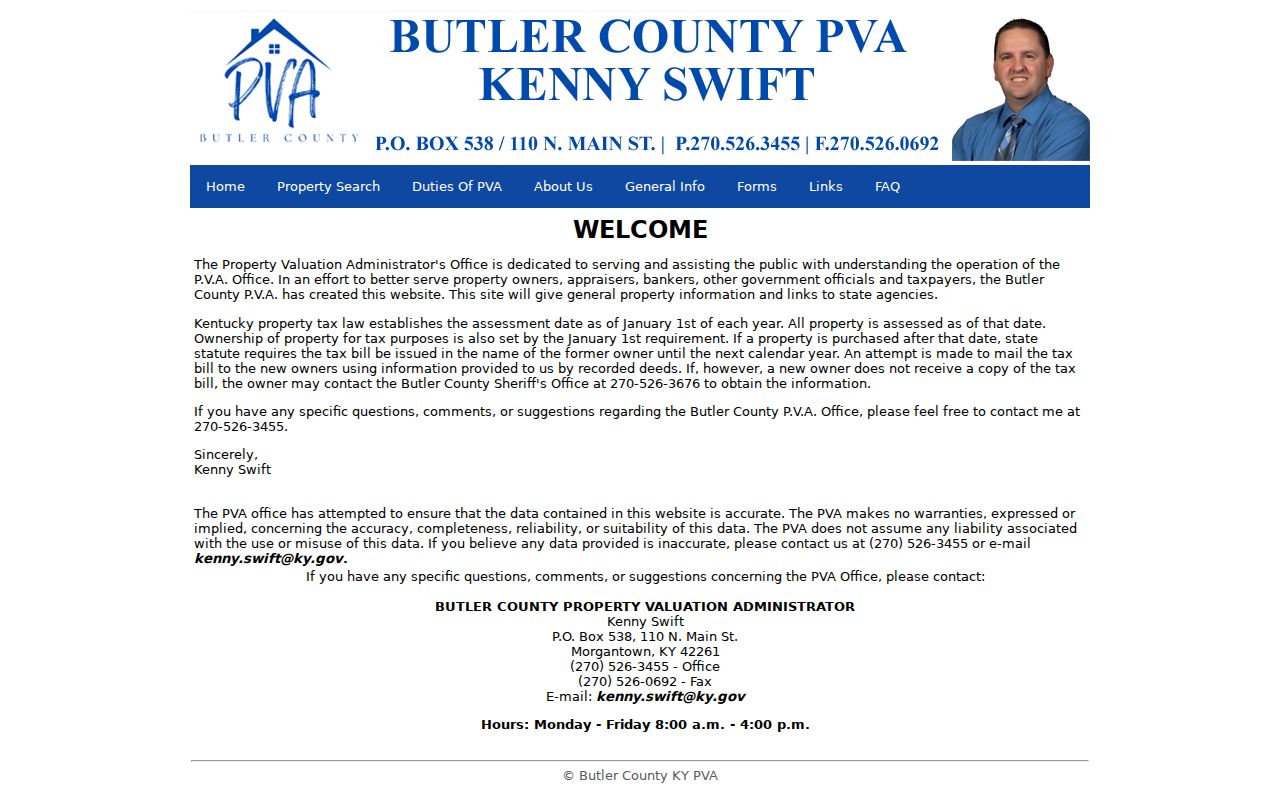
This notice is why dating matters. Pair the parcel card with the newest deed before settling any conclusion about the current owner.
Butler Entity Owners Need Context
If the owner line names an LLC, search it. The Kentucky Secretary of State Business Entity Search takes the exact entity name. The portal offers a search-key control, text entry, and an active-only checkbox. Clear the checkbox for dissolved or renamed firms. A registered agent, principal office, or filed document can show who receives formal entity notices. None of it transfers the real estate. The deed still must match the legal description. Trust and estate captions need the same care. Keep trustee, executor, administrator, and beneficiary roles distinct.
Resolve Conflicting Butler Owner Names
Start with dates when the tax roll and the deed disagree on a Butler County owner of record. Next, compare the parcel number and the legal description. False matches happen easily. A shared surname, a changed mailing address, or two companies with similar names can blur the result. A delinquent-tax list will not settle it, since it is a dated balance report showing bill, map, name, property address, and amount fields rather than current ownership.
Another channel helps when the online record stays unclear. Call the PVA at 270-526-3455 or write to P.O. Box 538. The Clerk takes calls at 270-526-5676, mail at P.O. Box 449, and counter requests at 110 N. Main Street. Both offices keep weekday hours from 8:00 a.m. to 4:00 p.m. For older deed records, KDLA microfilm and FamilySearch deed books fill historical gaps.
Bring a short conflict sheet to either counter. Include the qPublic owner text and observation date, the latest eCCLIX recording date and grantee, the full map number, both the situs and mailing addresses, and the deed's legal description. Ask each office which record date it applies. That focused request works far better than simply asking for "the owner."
Check whether a recent deed conveys the whole parcel or just an interest, lot, or tract. A correction deed, quitclaim, life estate, trust transfer, or partial conveyance can all explain why one owner label falls short. Keep the vesting language intact instead of compressing it into a single personal name. When the disputed item is an existing public administrative record, Kentucky's Open Records Act opens an inspection or copy route, though it does not obligate the PVA or Clerk to decide title, build a new report, or do legal research. A formal title examination may still be wise before a purchase or boundary decision.
Butler Releases Need Review
A release can reshape a parcel's recorded history in Butler County without moving ownership anywhere. That is the trap. A satisfaction, lien release, or assignment sits in the deed records next to real conveyances. One careless index hit can look like a new owner of record. Chase the linked instruments instead. The grantee named in the most recent matching deed is still your best transfer clue.
Document type carries the meaning. A deed conveys an interest in the property. A release usually clears a prior claim or lien. Match the dates and reference numbers. That way a later release is never mistaken for a later owner. Treat the Clerk's index as a finding tool only. The text of the instrument itself controls what it actually did to the parcel.
Butler Probate Alters Vesting
Probate can change who holds title in Butler County. An affidavit of descent, an executor's deed, an administrator's deed, a will, a trust, or a surviving joint owner may all redirect vesting after death. CourtNet shows the probate case trail. The Clerk's recorded instrument ties that change to the land itself. Do not flatten a fiduciary's name into the beneficial owner of record. The deed records distinguish those roles for a reason.
Contact a Butler Current Owner
The tax mailing address is the one public contact clue tied to the parcel. Use it for a clear property matter. A purchase inquiry qualifies. So does a boundary question, an estate issue, or a request to discuss an easement. Do not publish or amplify the address simply because it appears in a public record.
Kentucky Safe at Home substitutes a protected address in many agency records for eligible participants. The state's compliance guidance, though, identifies real-estate holdings as an exception. Public access never suspends the laws against stalking, harassment, fraud, or identity theft.
Keep any inquiry tied to the parcel and its recorded business. A returned letter does not change the Butler County owner of record. A mailing address does not prove where anyone lives. When contact fails, lean on the deed's vesting and the PVA record date. Use them to decide which custodian should receive the next verification request.
Lawful use. Contact a Butler County current owner only for a legitimate property matter. Never harass, intimidate, or expose a person.