
Compare Butler County Property Value Types
A PVA figure, the consideration on a deed, and a private appraisal answer three different questions. Check the label and the effective year before comparing any two of them side by side.
| Value | What It Is | Where |
|---|---|---|
| Assessed value | PVA figure used in the property-tax system | Butler PVA assessment roll |
| Fair cash value | Mass-appraisal estimate under Kentucky standards | PVA valuation work |
| Recorded consideration | Amount stated for one transfer, if shown | County Clerk deed image |
| Private appraisal | Opinion for a stated purpose and effective date | Appraiser's report, not the public roll |
Exemptions complicate the picture further. A homestead exemption lowers the taxable amount without touching fair cash value. Deeds carry their own traps. A transfer between family members, into a trust, through an estate, or by quitclaim may state an amount. That amount may never have faced the open market.
A comparison sheet keeps all of this honest. Give every source its own row. Add columns for the parcel key, effective date, stated value type, and custodian. That discipline stops an old deed figure from masquerading as a current assessment. It also reveals when two records describe different land. That can happen after a split, consolidation, or map-number correction. Whenever a legal description or parcel identifier differs, settle the land's identity first. Only then draw conclusions from the numbers in the property records.
Read Butler County Assessed Value Fields
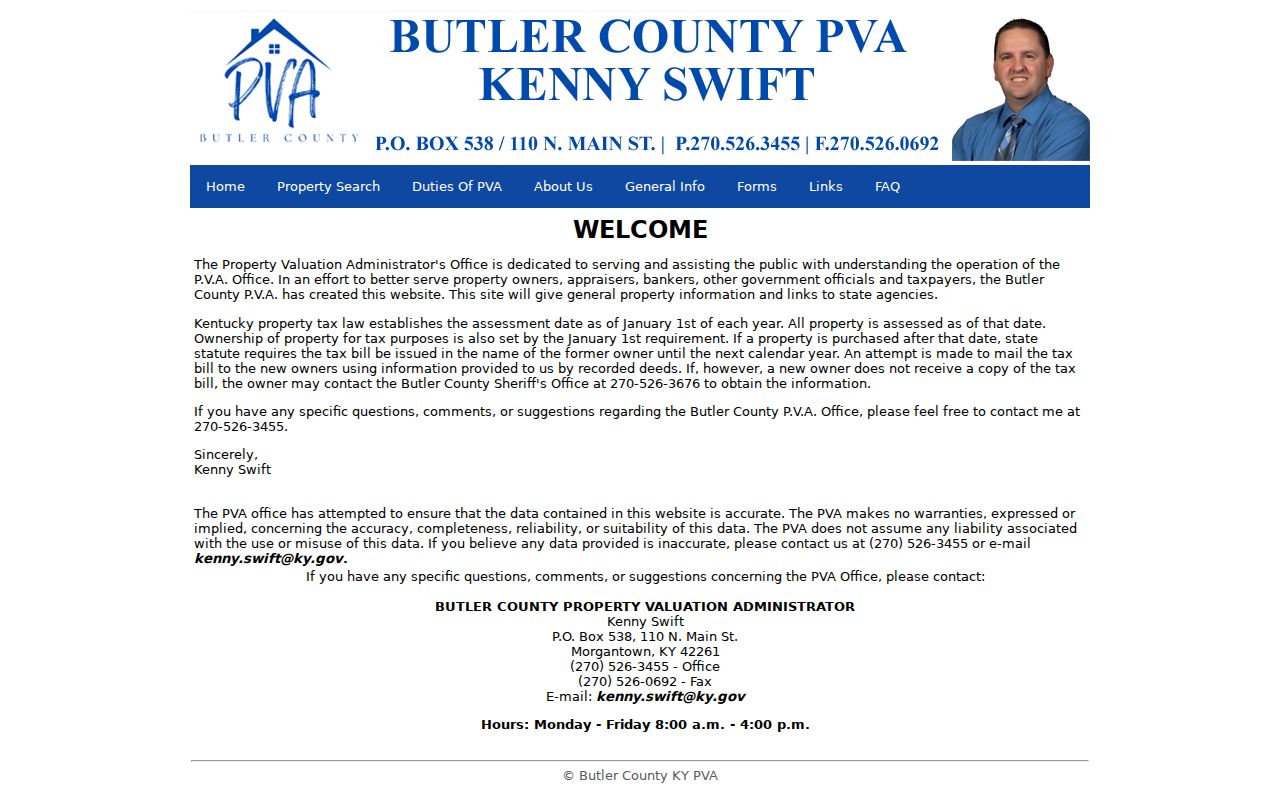
The Butler PVA site is the official route to assessment resources through qPublic. A typical result shows ASV, parcel, address, ownership, city, area, state, alternate ID, reference number, and STR. The card layout can vary. Any land or improvement split can vary too. So confirm the live labels instead of assuming them. The Butler PVA page identifies the official local source. It is a starting point, not proof of any single parcel's value.
Keep the value label, year, map number, situs, and legal-description clue together as one package. A number stripped of its year can mislead badly after a reassessment or a parcel change. Copy the context along with the figure.
January 1 Anchors Butler County Property Value Records
The PVA fixes assessment and ownership for tax purposes on January 1. Buy a parcel in June and the tax bill may still name the seller. The newest deed still records the transfer. The lag sits in the annual roll, not the deed itself. When a figure looks odd, ask which tax year produced it. Also ask where the parcel sat in the review cycle.
Real property is physically examined at least once every four years. The county and state description sets that schedule. That schedule does not move every parcel by the same amount. Nor does it sync all changes to one date.
The examination cycle is not a promise that the public card describes every improvement today. A permit may show only proposed work. An inspection or closed permit can show later progress. The assessment record still speaks for its own effective year. For a recently altered parcel, keep permit dates, the deed date, and the assessment year separate. Do not merge them into one timeline.
Note: A January 1 tax-roll snapshot is not a real-time estimate. It does not measure a property's sale value.
Looking Up a Butler County Property Value
Anchor every lookup to the parcel key. Address text alone can fail on rural roads or after a road-name change in Butler County. The parcel number keeps the assessment and the transfer record tied to the same land.
- Search the location address in Butler qPublic, broadening the road format when needed.
- Confirm the full map number, including every zero, decimal, and suffix.
- Read the displayed assessment label and year, recording exemptions separately.
- Check the newest County Clerk deed only when recorded consideration matters.
- Assessed value
- The PVA figure used in the tax system for the stated year.
- Market value
- A likely exchange value under stated conditions and at a stated date.
- Assessment ratio
- The relationship between assessed and market value when one is used.
- Reassessment
- A later review that may update the roll's value evidence.
Deed Consideration Records One Butler County Transfer
A deed image may state the consideration for a transfer. The Butler County Clerk holds those deed records through eCCLIX and at the courthouse. Images require subscription access. Do not assume every transfer exposes a sale amount in the public index.
Private users may run up to five noncommercial searches per day at no charge. That allowance appears in the Clerk's published explanation. When the index or an image is out of reach, the counter at 110 N. Main Street is the fallback. Consideration also needs context. A transfer may happen between relatives. It may also go into a trust, through an estate, or by quitclaim. Such a transfer may not reflect a typical market sale. Deed type and date matter as much as the amount itself.
The Clerk records other instruments too, including mortgages, releases, easements, and liens. Their dollar figures carry different meanings. A mortgage principal is not a sale price. A lien is not a valuation. A release amount says nothing about current worth. Read the deed itself and its transfer context before using any figure. When consideration is missing or ambiguous, leave that comparison blank. Do not substitute a number from another instrument in the deed records.
Butler County Exemptions Change Taxable Amounts
Homestead, disability, and other eligible exemptions can change the amount exposed to tax. They do not show that a property's market value dropped. Keep gross assessment, the exemption, and the net taxable amount in separate notes. The Butler PVA forms page helps locate state homestead, disability, exemption, and appeal materials. It does not treat an application as approval.
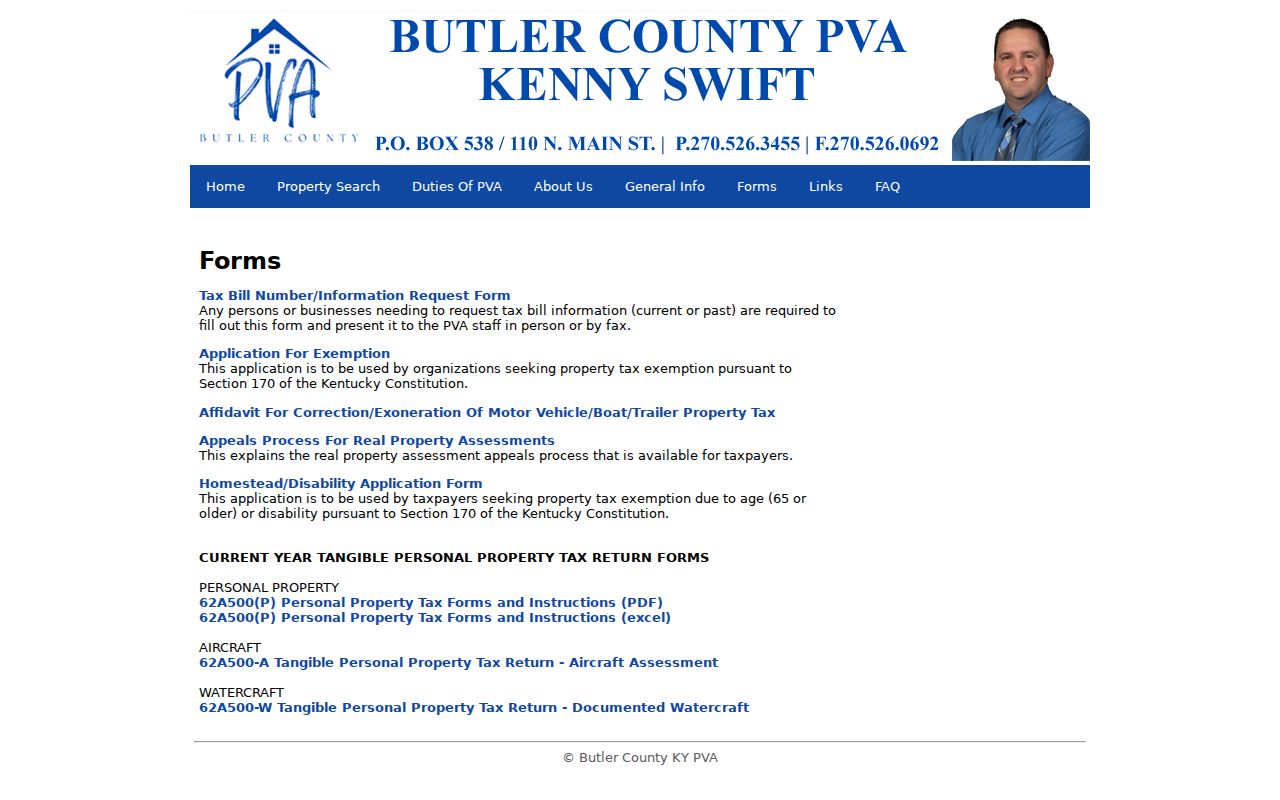
Confirm eligibility and the current form with the PVA, and see the separate property-tax records guide for bills and appeals.
A Butler County Tax Balance Is Not Property Value
A tax bill tells you what a county charges, not what a property is worth. It mixes the assessment with rates, exemptions, and collection details. The PVA-linked tax-bill lookup is the tool for finding a billed account. The delinquent list offers its own search paths. These include bill number, map number, name, property address, and account balance.
That delinquent list carries no deed book and page. It has no appraisal and no verified sale price. An account balance simply measures delinquency at publication. It says nothing about what a buyer should offer. It cannot tell you whether a tax sale ever closed.
The delinquent list still has a use beyond debt. Its map-number format keeps hyphens, decimal portions, and sometimes a suffix like MH. Copying that complete key can lead you back to the PVA card. There, the proper assessment field lives. Treat the balance as a balance. Butler County tax records can connect accounts to parcels well. They stay silent on value.
River History Does Not Price Butler County Property
River history can answer boundary questions, not price questions. Woodbury's setting at Lock/Dam No. 4 and Rochester's Lock/Dam No. 3 and Suffolk history help explain river, landing, road, or adjoining-owner calls in old deeds. Morgantown permit activity can point toward land-use files. None of it produces a citywide price trend.
Open KYGeoNet for geographic context, then chase the deed, easement, restriction, or plat whenever access shapes a property's value. A historic map or a city boundary line is not comparable-sales evidence.
Note: Butler County publishes no city-level value trend or sales-price series.
Limits of Butler County Property Value Records
A PVA assessment is a mass-appraisal record built for taxation. That limits what it can tell you. It cannot establish exact condition, title quality, survey lines, or access rights, nor the price a particular buyer would pay. Its effective date may also differ from the date of the latest deed on file.
Value vs price. Butler County assessed value supports taxation. It is neither a current private appraisal nor a promise of what the property would sell for.
When the stakes are real, keep the official parcel record, inspect the current deed and plats, and bring in qualified valuation or title help for the question at hand. Save the retrieval date with each record, too. A later PVA refresh, a corrected deed, a parcel split, or an exemption decision can change the comparison without making your earlier copy wrong.